

Union Budget 2026: What the Numbers Actually Mean for India's Economy in FY27
FEATURED

Union Budget 2026: What the Numbers Actually Mean for India's Economy in FY27

By PrincipaCore Team • Jan 31, 2026

Market Pulse

LOADING...
Nifty 50
-- --
S&P 500
-- --
USD/INR
-- --
Bitcoin
-- --
Nvidia
-- --
Reliance
-- --

Latest Videos

Main Feed

The Copper Crisis: Why Record Prices Will Heat Up AC Costs and Reshape Electronics Manufacturing in India
Electronics

The Copper Crisis: Why Record Prices Will Heat Up AC Costs and Reshape Electronics Manufacturing in India

Copper prices have surged to record highs due to a structural supply shortage colliding with explosive demand from EVs, AI data centers, renewables, and defense. This is pushing AC and appliance prices up 7–10% in India, with impacts spreading across electronics, EVs, and infrastructure. The copper crisis isn’t temporary—it’s a long-term constraint India must strategically address.

Jan 22, 2026
India's Economic Outlook FY26: Why 7.3% Growth Is Just the Beginning (Not the Peak)
Economy

India's Economic Outlook FY26: Why 7.3% Growth Is Just the Beginning (Not the Peak)

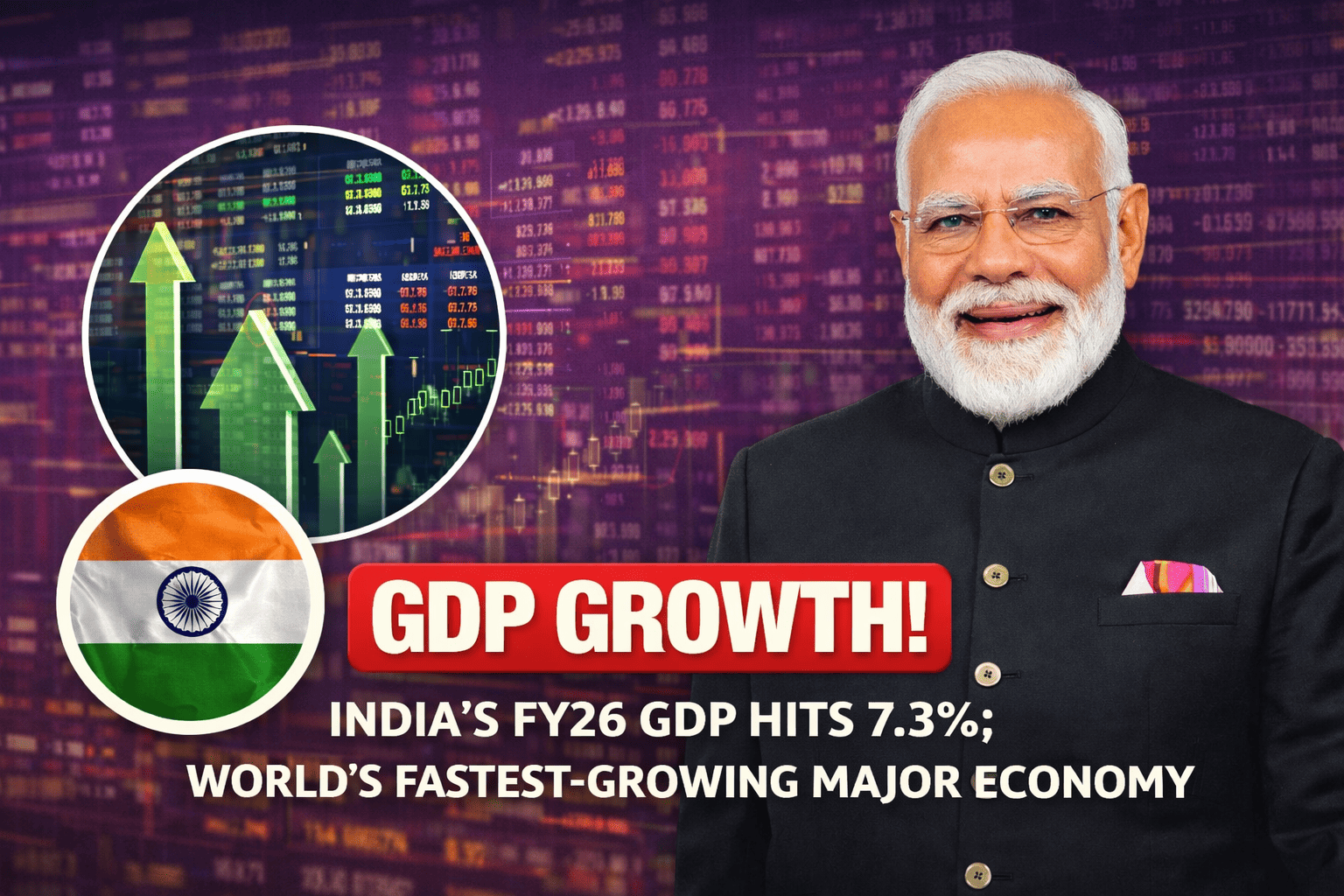
India's economy is currently the world's fastest-growing major economy, projected to hit 7.3% GDP growth in FY26, a "Goldilocks" moment driven by tax cuts, a manufacturing boom (especially in electronics and the China+1 strategy), the rise of AI services, rural recovery, and historically low inflation that has enabled interest rate cuts. While temporary cyclical boosts will see growth moderate to a healthy 6.4% in FY27, long-term structural advantages—such as services export dominance and favorable demographics with a young population—position India for a decade of sustained 6-7% growth, creating significant job opportunities in sectors like technology, manufacturing, and logistics for Gen-Z.

Jan 21, 2026
India's $1 Trillion Digital Economy: The Historic Convergence No One's Talking About
IT

India's $1 Trillion Digital Economy: The Historic Convergence No One's Talking About

Based on a triangulation of data from government sources, tier-1 financial institutions, and corporate filings, our analysis confirms that India's digital economy is on an irreversible trajectory to hit $1 Trillion by 2030 (potentially FY28). This is not merely a linear projection of past IT success; it is a historic convergence of two distinct forces. We are witnessing the mature $283B IT Services sector pivoting to high-margin AI delivery, colliding with a nascent but exploding $125B Electronics Manufacturing sector growing at a massive 32% CAGR. The primary catalyst is structural: Apple’s decision to shift its supply chain to India is rapidly building an entire component ecosystem, supported by targeted government PLI capital. However, the data reveals a critical bottleneck that few are discussing—an 18 million person talent deficit in specialized technical roles. While capital and infrastructure are aligning, the human resource gap remains the single greatest threat to the timeline. This report analyzes the hard numbers behind the growth, the margin pressures in manufacturing, and the realistic probabilities of hitting the target date based on talent acquisition and geopolitical stability.

Jan 15, 2026
Infrastructure Boom Drives 15% Return for Indian Housing Market in 2025
Real Estate

Infrastructure Boom Drives 15% Return for Indian Housing Market in 2025

India’s housing market delivered a robust 15% total return over the past year, beating inflation and challenging negative narratives. The growth is primarily driven by new infrastructure (Metros, Ring Roads) rather than just location. Top Performers: Bengaluru led with 24% growth due to new Metro lines, while Mumbai and Hyderabad saw double-digit gains from improved connectivity. Inventory Reality: While unsold inventory hit 11 lakh units, much of it (especially in Delhi-NCR) is "dead stock" (5+ years old). Buyers are actively chasing newly launched premium homes. Outlook: The sector remains strong for 2026. The key investment strategy is to follow infrastructure projects that reduce commute times, unlocking value in peripheral markets.

Jan 06, 2026
Best Auto Stocks to Look Out in 2026 (2025–2030) — Educational Watchlist, Valuation Lens & Portfolio Framework
Automobile

Best Auto Stocks to Look Out in 2026 (2025–2030) — Educational Watchlist, Valuation Lens & Portfolio Framework

Indian Auto Sector 2025-2030: Stock Watchlist & Strategy This final part of the series translates the Premiumisation and Selective EV trends into an educational stock watchlist for 2025-2030. The Big Shift: Profit pools are moving from volume players to premium OEMs and high-tech suppliers. OEM Watchlist: Mahindra & Mahindra: Top growth pick due to premium SUV dominance and strong capital allocation. Maruti Suzuki: Best defensive pick for its hybrid strategy, cash reserves, and distribution moat. Tata Motors: A "monitor" pick for its EV first-mover advantage, though much of the turnaround is priced in. The "Real Alpha" (Ancillaries): Sona BLW: Pure-play bet on global EV drivelines. Bharat Forge: Export and defense diversification (less cyclical). Motherson: Global scale player benefiting from increased content per vehicle. Strategy: Investors should build portfolios based on risk tolerance (Conservative vs. Aggressive) and focus on 5-year structural outcomes rather than short-term price noise. (Disclaimer: Educational purposes only. Not SEBI-registered investment advice.)

Jan 04, 2026