
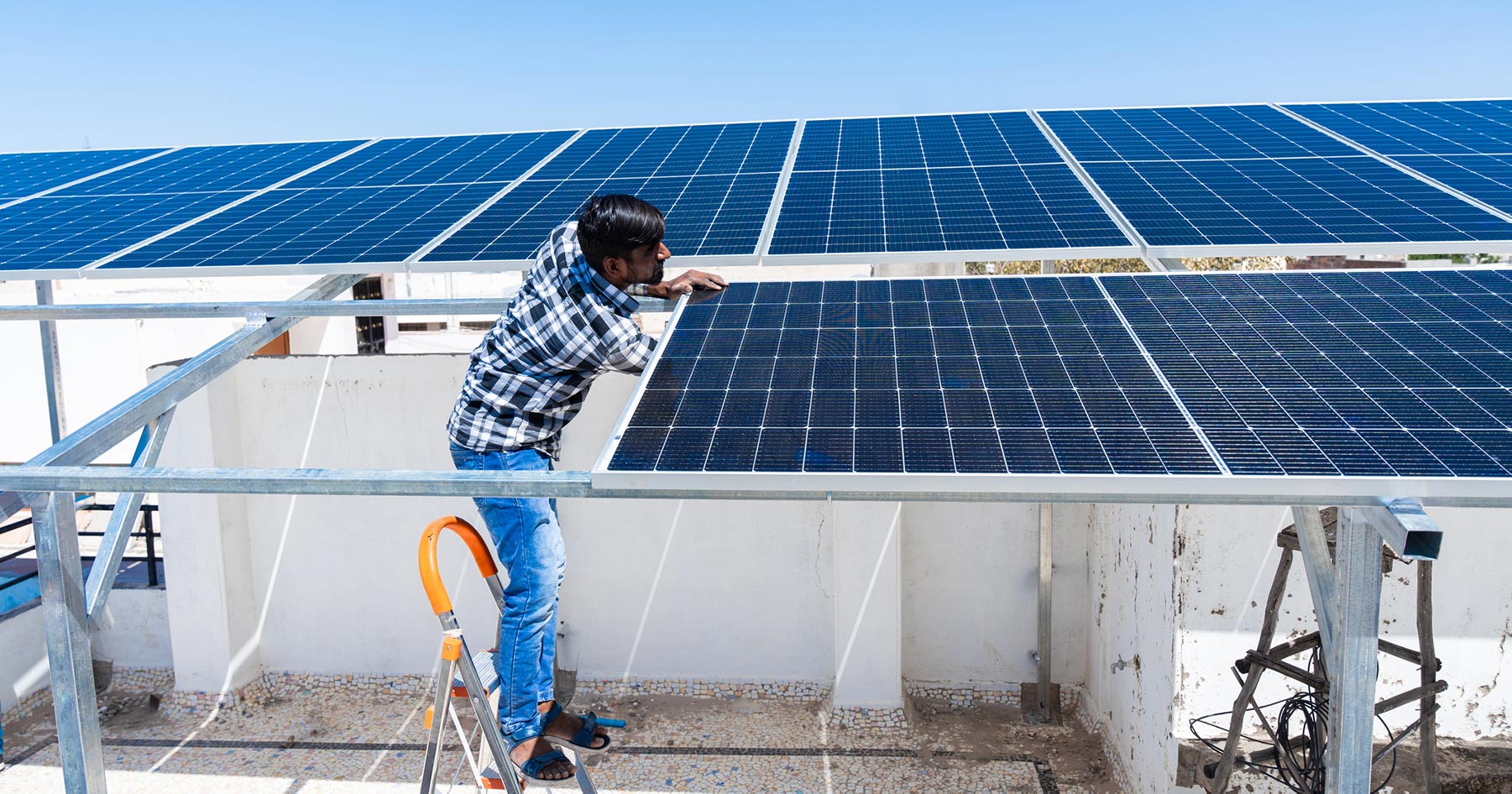
Why Renewable Energy Costs Are Rising Despite Cheaper Solar Panels
Solar panel prices have declined dramatically, yet total renewable energy system costs are now rising. The answer lies in infrastructure—and once again, copper.
📅January 2026
⏱️9 min read
🌱Energy Transition

Renewable energy is often assumed to get cheaper every year—a reasonable expectation given the dramatic decline in solar panel costs over the past decade.
While solar panel prices have indeed fallen by over 90% since 2010, total renewable energy system costs are now rising. This creates a paradox that puzzles consumers, investors, and policymakers alike.
The reason lies not in the panels themselves, but in the infrastructure required to integrate renewable energy into the grid at scale. And at the center of that infrastructure sits copper—a material facing structural scarcity.
Renewable Energy Is Infrastructure-Heavy
Unlike fossil fuel power plants that generate electricity at centralized locations near consumption centers, renewable energy requires vast infrastructure networks to capture, transmit, and balance intermittent power generation.
A functional renewable energy system depends on:

All of these infrastructure components are deeply copper-intensive. Renewable energy doesn't reduce copper usage—it multiplies it several times over compared to traditional power generation.
"This energy demand is being driven by India's electronics manufacturing boom and semiconductor fabs, part of the $1 Trillion Digital Economy convergence."
Solar Panels Are Only Part of the Total Cost
When analyzing renewable energy economics, focusing solely on panel prices creates a misleading picture. Panels represent only one component of a complex system.
Even as panel prices continue to fall, other system costs are rising:
Renewable Energy System Cost Trends
Solar Panels ↓ 8-12%
Copper Wiring & Cables ↑ 40%+
Transformers ↑ 25-35%
Grid Upgrades ↑ 30-40%
Battery Storage Integration ↑ 20-30%
Copper sits at the center of each infrastructure layer. As copper prices surge, the cost savings from cheaper panels are offset—or even reversed—by rising balance-of-system costs.
📊 Core Analysis
The Copper Crisis: Why Record Prices Will Heat Up AC Costs and Reshape Electronics Manufacturing in India
Understand the structural supply deficit driving copper scarcity and why global prices hit record highs in 2025.
India's Renewable Ambitions Multiply Copper Demand
India has set an ambitious target: 500 GW of renewable energy capacity by 2030. This represents one of the most aggressive clean energy transitions globally.
Achieving this target requires:
- Massive grid expansion: Connecting remote solar and wind farms to demand centers
- EV-compatible distribution networks: Supporting millions of electric vehicle chargers
- Battery-linked storage systems: Balancing intermittent renewable generation
- Smart grid infrastructure: Managing bidirectional power flows and demand response

This copper requirement comes at a time when global supply is already constrained by EV adoption, AI data centers, and limited new mine development.
Rising Costs Don't Kill Renewables—They Slow Them
Higher infrastructure costs don't make renewable energy unviable. Solar and wind remain cost-competitive with fossil fuels on a levelized basis, even with elevated copper prices.
However, rising costs create tangible friction:
Project-Level Impacts
- Project IRRs tighten: Returns drop from 15-18% to 12-14%, reducing investor appetite
- Payback periods extend: Longer timelines increase financing costs and risk
- Smaller developers face financing stress: Higher upfront costs favor large, well-capitalized players
- Grid connection delays increase: Utilities struggle with upgrade capital requirements
The result isn't abandonment—it's slower deployment. Projects get delayed, financing rounds take longer, and ambitious timelines get pushed back.
This slowdown matters. Every year of delay in renewable deployment means continued reliance on fossil fuels, higher emissions, and increased vulnerability to energy price volatility.
Strategic Implications for India
Renewable energy is no longer just an energy policy issue. It has become a materials security issue.
India imports ~70% of its refined copper, creating strategic vulnerability as renewable ambitions scale. Without securing copper supply through multiple channels, energy transition costs will remain structurally elevated.
Critical policy priorities include:
- Copper recycling infrastructure: E-waste recovery and urban mining programs
- Domestic refining capacity: Processing imported concentrate domestically
- Strategic import agreements: Long-term contracts with producer nations
- Strategic copper reserves: Buffer stocks for critical infrastructure projects
- Material efficiency standards: Incentivizing designs that optimize copper usage
🔗 Related Article
Why Electric Vehicles Are Still Expensive in India: The Hidden Cost Structure Explained
See how copper scarcity impacts another critical pillar of India's clean energy transition—electric mobility.
Final Perspective: Material-Intensive by Nature
Renewable energy remains the future of global power generation. The economics still favor clean energy over fossil fuels in most markets, and technology continues to improve.
The Core Reality
The future is simply more material-intensive than previously assumed. Copper scarcity doesn't stop the energy transition—it defines its pace, cost structure, and geopolitical dynamics.
For investors, this creates opportunities in:
- Copper mining and refining companies
- Recycling and urban mining businesses
- Grid infrastructure developers
- Energy storage technology providers
For policymakers, it underscores the need to treat critical materials with the same strategic importance as energy security itself.
For consumers and businesses planning renewable installations, it means factoring in higher balance-of-system costs and longer project timelines than historical benchmarks would suggest.
The renewable energy transition will happen. But it will be shaped as much by material availability as by technological innovation or policy ambition. Understanding this reality is essential for realistic planning and effective strategy.

SwapTheMarkets | Market Analysis & Economic Insights
© 2026 SwapTheMarkets. All rights reserved.